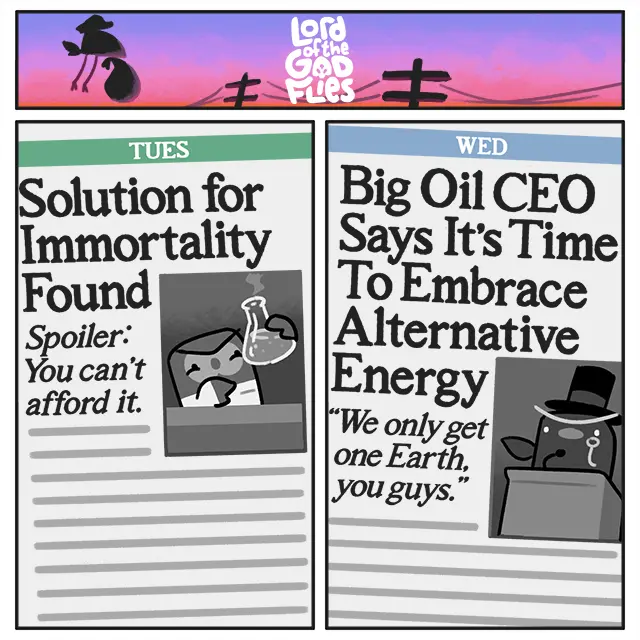
Yeah, its not the CEOs that ultimately make these decisions, theyre just the figurehead for the board. The board being the spokespeople for the shareholders.
Though, even if you replace the image on the right with one depicting a board of directors or a shareholder meeting, it wouldnt be accurate. Theyll do whats in their best interest and no further. Even if it fucks the rest of the world over.
Exactly, even if every member of the board recognized their individual interest to pivot the company’s focus to green energy, they would still be replaced over time by those willing to sacrifice everything for short to mid term gains, since that’s what the shareholders are incentivized to demand
The idea that “public companies only exist to maximize value for the shareholders” is toxic af, and only introduced because some famous economist made it popular [source needed, I have some vague recollection but I’m talking out of my ass]. Once it became the de facto law of capitalism, “investors” stopped allowing decisions that didn’t benefit their bottom line, and could sue to ensure decisions that they disagree with (especially if they cost more than they earn)
If we took away the “legal obligation to the shareholders”, which is an ultra-simplistic optimization that often results in “greedy algorithm” decision making for next quarters earnings, and made the obligation to 50% employees and 50% shareholders, along with better ongoing taxation of negative externalities, being on the board would be a real job instead of a few hours a week position in some cases. You’d have to negotiate big picture things, handle employee concerns seriously, while still being pushed to generate revenue by the shareholders.
Capitalism would probably still work, mostly. I think if leadership weren’t driven by “shareholder value”, adding plans to mitigate externalities that aren’t required by law would be easier. Currently, I don’t think any company builds a coal power plant with smoke or co2 capture that isn’t required to by law.
Stock markets would still be able to pick and choose investments, but if a company chose a 10 year plan that loses money the first year, they couldn’t be sued for replacement so long as the employees and one board member agreed on it.
Idk. It’s a poorly thought out fantasy of mine to fix how corporations work. I’m sure I’m missing something other than big piles of money that would never let it happen. There are a lot of other systemic legal and structural problems we’d need to fix, but reallocating boards to be 50% voting employee representatives would be a starting point.
The probpem isnt that someone suggested it and every shareholder was like “duh, why didnt we think of that?” Its that its the inevitable conclusion of a system where profit is the main (and generally only) determination of success. Individuals within said corporations or shareholders can have other ideals, but ultimately they will be less successful and have less of a say in how things are run.
Capitalism is a winner take all system based on economic prisperity, so those who maximise profit over all else will end up taking it all. You would have to fundamentally change our economic systems to make any kind of significant difference.


Yeah, its not the CEOs that ultimately make these decisions, theyre just the figurehead for the board. The board being the spokespeople for the shareholders.
Though, even if you replace the image on the right with one depicting a board of directors or a shareholder meeting, it wouldnt be accurate. Theyll do whats in their best interest and no further. Even if it fucks the rest of the world over.
Exactly, even if every member of the board recognized their individual interest to pivot the company’s focus to green energy, they would still be replaced over time by those willing to sacrifice everything for short to mid term gains, since that’s what the shareholders are incentivized to demand
The idea that “public companies only exist to maximize value for the shareholders” is toxic af, and only introduced because some famous economist made it popular [source needed, I have some vague recollection but I’m talking out of my ass]. Once it became the de facto law of capitalism, “investors” stopped allowing decisions that didn’t benefit their bottom line, and could sue to ensure decisions that they disagree with (especially if they cost more than they earn)
If we took away the “legal obligation to the shareholders”, which is an ultra-simplistic optimization that often results in “greedy algorithm” decision making for next quarters earnings, and made the obligation to 50% employees and 50% shareholders, along with better ongoing taxation of negative externalities, being on the board would be a real job instead of a few hours a week position in some cases. You’d have to negotiate big picture things, handle employee concerns seriously, while still being pushed to generate revenue by the shareholders.
Capitalism would probably still work, mostly. I think if leadership weren’t driven by “shareholder value”, adding plans to mitigate externalities that aren’t required by law would be easier. Currently, I don’t think any company builds a coal power plant with smoke or co2 capture that isn’t required to by law.
Stock markets would still be able to pick and choose investments, but if a company chose a 10 year plan that loses money the first year, they couldn’t be sued for replacement so long as the employees and one board member agreed on it.
Idk. It’s a poorly thought out fantasy of mine to fix how corporations work. I’m sure I’m missing something other than big piles of money that would never let it happen. There are a lot of other systemic legal and structural problems we’d need to fix, but reallocating boards to be 50% voting employee representatives would be a starting point.
The probpem isnt that someone suggested it and every shareholder was like “duh, why didnt we think of that?” Its that its the inevitable conclusion of a system where profit is the main (and generally only) determination of success. Individuals within said corporations or shareholders can have other ideals, but ultimately they will be less successful and have less of a say in how things are run.
Capitalism is a winner take all system based on economic prisperity, so those who maximise profit over all else will end up taking it all. You would have to fundamentally change our economic systems to make any kind of significant difference.