

It’s nothing to do with fear, it’s down to cost, practicality, experience and security.
The one thing these people are not afraid of is change. Every senior management resource within every medium to large business wants to implement change.


It’s nothing to do with fear, it’s down to cost, practicality, experience and security.
The one thing these people are not afraid of is change. Every senior management resource within every medium to large business wants to implement change.

And pay the additional licence? Why?


As a data consultant, I would say those companies already do question the process, and have done for decades.
Yes there are countless situations where a dedicated system or database could and should replace Excel, but there are just as many scenarios where Excel is ideal, and swapping out a spreadsheet for what would be potentially tens of separate applications across the business, or one absurdly expensive behemoth, to perform tasks that could be done rapidly and clearly in Excel is neither practical nor economically viable for most companies. A spreadsheet is perfect for plenty of situations.
My job is literally to help these companies move to appropriate database solutions, often transitioning away from Excel. But there’s no getting around that a spreadsheet solves (often simple) problems that are impractical with other tools. You can move a company to a supplier’s sector-specific solution and solve huge numbers of issues, but unless that solution exactly meets every aspect of the business requirements, there’s always going to be a fallback and it’s often Excel, for better or worse.
This is a Ken M level conversation and I love it.


I can only assume anyone still asking the question “is Excel really that much better than the alternatives?” lacks exposure to Power Query and its prevalence in business.
Absolute top class comment.


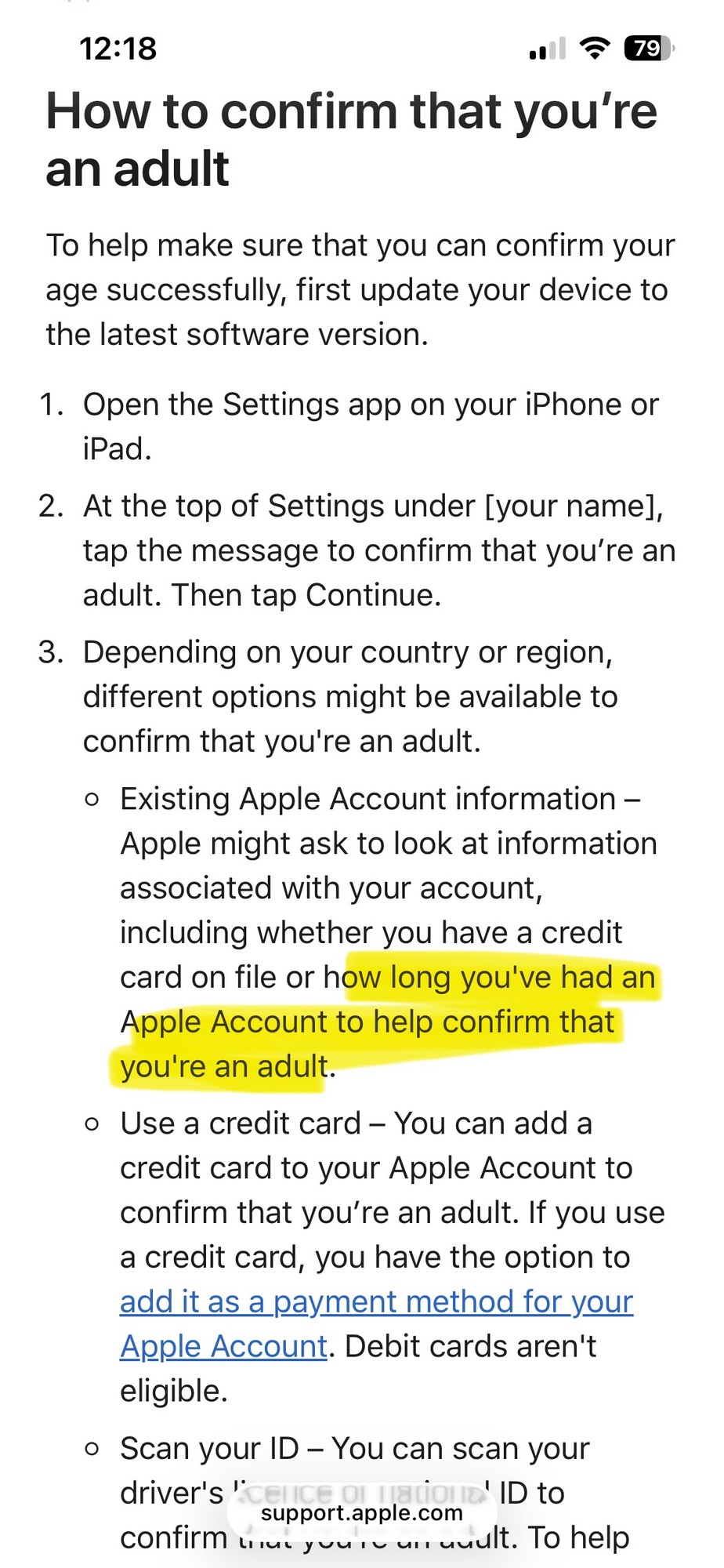
Well they do, but the actual reason given on the subsequent screen was down to when my Apple ID was set up.
Looks like they do it either way.


I installed this last night and was presented with a warning screen saying that I’d have to provide ID, then the following screen basically said “Nah, you’re good bro, we don’t need your ID”.
I’m hoping that was as a result of my Apple ID having been set up many years ago, rather than them having seen my camera roll and concluded that this guy is clearly old as fuck.


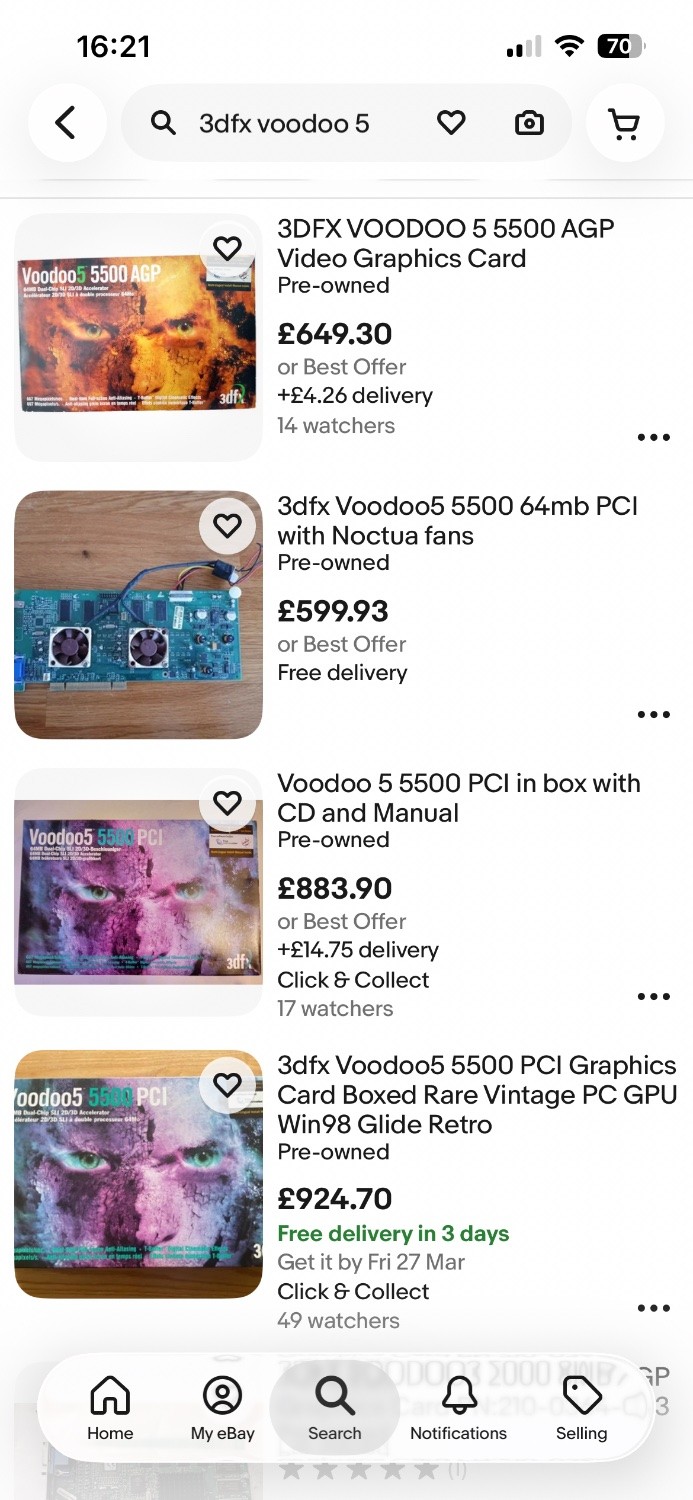
Holy shit I thought you were joking.


I had a Voodoo 5, which I bought about a month before 3dfx went tits up. Impeccable timing.


Because then nobody would use Windows. People use windows because it runs all of the programs they love. If it didn’t people wouldn’t put up with their bullshit.
The suggestion isn’t to completely destroy compatibility with modern windows applications. And besides which, those same wholesale direction changes didn’t result in a macOS exodus.


Windows’ bloat isn’t because they have to maintain backwards compatibility. It’s because they keep adding more shit, and the shit they add isn’t exactly hyper optimized.
Well, it’s both of those. There is plenty of bloat due to a necessity to maintain backwards compatibility. I’m well aware of the extra shit they add, but that’s not what I’m asking about.
Apple’s MacOS transition is driven by the hardware change. The next MacOS will not support Intel machines, so I would imagine those aspects of compatibility will be removed going forward, such as Rosetta 2.
The question was related to an equivalent aspect in Windows: since Windows 11 requires certain hardware, why doesn’t Microsoft treat Windows in a similar vein?


Every desktop/laptop will not upgrade to 11. There’s a whole bunch of hardware requirements that prevent it from being installed on legacy systems.


Ah right, I’d assumed old hardware because you’d said “upgrade aging infrastructure”.


Yeah I understand those legacy systems, but I wouldn’t expect those to be upgrading to Windows 11 for example. I guess that’s why I was suggesting a separation of “then” and “now” operating systems.


Wouldn’t the aging hardware running that legacy software not be upgradable to the latest Windows versions due to modern hardware requirements anyway?


What financial incentive is there in user retention and code improvements?
Is that a serious question?
Simplified codebase = fewer internal resources required.
User retention = continued revenue streams from applications and services that run on that platform.


I think that’s what I find weird. Like, the capacity is there. Something like the Xbox has underlying Windows components, and supposedly they make an effort to strip out redundancies for things like those ROG handhelds. So they’re already doing it to some extent.


Ah right, yeah the bloat I’m asking about isn’t so much about all the shit applications they bundle in, but the stuff that remains to maintain compatibility with obscure or legacy hardware/applications.
The financial incentive would be long term user retention, combined with a simplified codebase and performance improvements.
Absolutely wild brand activation tactics from the Linux marketing team.
