The phrase “in its current form/implementation” is doing quite a lot of work there, how the technology is implemented is the topic. That’s whether it’s primarily used to replace workers (not that I think it capable of that in earnest right now) and maximise profits, or to reduce workloads, improve services and make people’s lives easier, and those are largely a question of political and economic priorities.
The fact that people can use a tool badly, or become overly dependent on it, doesn’t mean the tool is inherently harmful. You could make similar arguments about calculators, GPS, the internet or countless other technologies we’ve incorporated into everyday life. I’ve always had a naturally good sense of direction, I don’t think GPS ruined the world by helping people who don’t.
I also don’t see how restricting access to a tiny group of specialists is supposed to improve matters. Surely concentrating the benefits of a powerful technology in the hands of a privileged few would make some of the problems we’re discussing way worse?
Nothing changes if we waited another five years, imo. Efficiency and reliability will presumably improve, but if the same economic incentives remain, those improvements can just as easily be used to displace more workers and concentrate more wealth.
That’s really all i’m saying above. We can argue about the limitations of the technology all day, but if we don’t address the systems determining how it’s deployed and who benefits from it, we’re missing a much bigger part of the problem. It’s akin to renovating a house while ignoring that it’s built on a lake of custard.
You misunderstand: its current form is a garbage, half right at best, cheating, autocomplete algorithm. There is no logic except how the petabytes of stolen intellectual property weigh responses. It is esswntially the sum total of quora, reddit, and quizlet after reading 20% of the actual material; most of those sources being flawed, and hardly bothering to pick the good parts instead of the garbage.
That is not a tool, nor is it useful. Useful implies it benefits you, when on the whole it physically hurts the planet (thus you), obliterates critical thinking, and gets you addicted before stealing all of your money – all while increasing human distrust in legitimate work, destroying professional skillsets for no benefit, and in about max 2 years or so will be too expensive to continue running (6ou cant bleed 80 billion every year, unfortunately)
I find this perspective quite difficult to reconcile with my own experience. I’ve saved countless hours using AI, solved problems I wouldn’t previously have known how to approach, and used it to venture into areas well outside my existing skill set, often learning a great deal in the process. So when you insist it’s useless, destroys critical thinking and erodes skills, I can’t help but feel you’re demonstrating a lack of imagination about how it can actually be used, along with a bit of doomerism.
If you’re blindly accepting everything it tells you and outsourcing all your thinking to it, I can see how that might be detrimental. But that’s one way of using it. You can just as easily use it to explore unfamiliar subjects, interact with complicated concepts, challenge your assumptions and develop skills you didn’t previously have. These are largely questions of education and critical thinking, and teaching people how to evaluate information and use tools responsibly is invaluable whether LLMs exist or not. We could honestly use a bit of motivation to push this harder don’t you think?
Again, the environmental costs and concerns about cognitive dependency are valid, but neither establishes that the technology has no utility. Likewise, the enormous financial losses of some AI companies raise serious questions about their business models, but you’re making the common mistake of confusing that with whether the technology itself is economically viable. The cost of running models at comparable levels of capability has fallen enormously in a handful of years, and there’s no reason to expect that to suddenly cease.
Your argument here conflates three different questions: whether AI is useful, whether the current industry is financially sustainable, and whether its widespread adoption is benefiting society. These are related, but fundamentally different questions with potentially very different answers, and you seem more interested in dismissing all three outright than examining them individually.
And once again, several of your criticisms concern corporate behaviour and economic incentives, which is precisely what my original comment was about. Others are legitimate questions about the technology’s limitations and how people use it. But you’re lumping all of these together as though they demonstrate that AI is fundamentally useless, when they don’t. A technology can have serious limitations, be deployed irresponsibly and still offer enormous practical value.


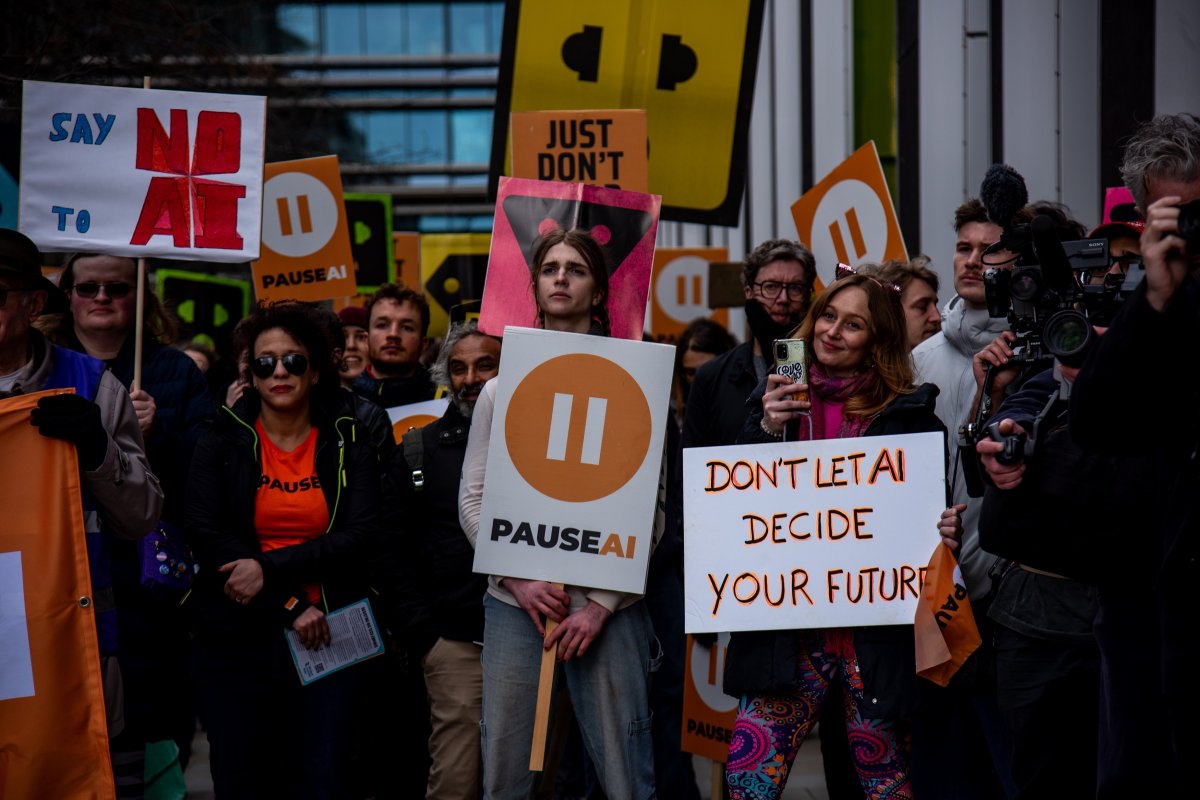
The phrase “in its current form/implementation” is doing quite a lot of work there, how the technology is implemented is the topic. That’s whether it’s primarily used to replace workers (not that I think it capable of that in earnest right now) and maximise profits, or to reduce workloads, improve services and make people’s lives easier, and those are largely a question of political and economic priorities.
The fact that people can use a tool badly, or become overly dependent on it, doesn’t mean the tool is inherently harmful. You could make similar arguments about calculators, GPS, the internet or countless other technologies we’ve incorporated into everyday life. I’ve always had a naturally good sense of direction, I don’t think GPS ruined the world by helping people who don’t.
I also don’t see how restricting access to a tiny group of specialists is supposed to improve matters. Surely concentrating the benefits of a powerful technology in the hands of a privileged few would make some of the problems we’re discussing way worse?
Nothing changes if we waited another five years, imo. Efficiency and reliability will presumably improve, but if the same economic incentives remain, those improvements can just as easily be used to displace more workers and concentrate more wealth.
That’s really all i’m saying above. We can argue about the limitations of the technology all day, but if we don’t address the systems determining how it’s deployed and who benefits from it, we’re missing a much bigger part of the problem. It’s akin to renovating a house while ignoring that it’s built on a lake of custard.
You misunderstand: its current form is a garbage, half right at best, cheating, autocomplete algorithm. There is no logic except how the petabytes of stolen intellectual property weigh responses. It is esswntially the sum total of quora, reddit, and quizlet after reading 20% of the actual material; most of those sources being flawed, and hardly bothering to pick the good parts instead of the garbage.
That is not a tool, nor is it useful. Useful implies it benefits you, when on the whole it physically hurts the planet (thus you), obliterates critical thinking, and gets you addicted before stealing all of your money – all while increasing human distrust in legitimate work, destroying professional skillsets for no benefit, and in about max 2 years or so will be too expensive to continue running (6ou cant bleed 80 billion every year, unfortunately)
I find this perspective quite difficult to reconcile with my own experience. I’ve saved countless hours using AI, solved problems I wouldn’t previously have known how to approach, and used it to venture into areas well outside my existing skill set, often learning a great deal in the process. So when you insist it’s useless, destroys critical thinking and erodes skills, I can’t help but feel you’re demonstrating a lack of imagination about how it can actually be used, along with a bit of doomerism.
If you’re blindly accepting everything it tells you and outsourcing all your thinking to it, I can see how that might be detrimental. But that’s one way of using it. You can just as easily use it to explore unfamiliar subjects, interact with complicated concepts, challenge your assumptions and develop skills you didn’t previously have. These are largely questions of education and critical thinking, and teaching people how to evaluate information and use tools responsibly is invaluable whether LLMs exist or not. We could honestly use a bit of motivation to push this harder don’t you think?
Again, the environmental costs and concerns about cognitive dependency are valid, but neither establishes that the technology has no utility. Likewise, the enormous financial losses of some AI companies raise serious questions about their business models, but you’re making the common mistake of confusing that with whether the technology itself is economically viable. The cost of running models at comparable levels of capability has fallen enormously in a handful of years, and there’s no reason to expect that to suddenly cease.
Your argument here conflates three different questions: whether AI is useful, whether the current industry is financially sustainable, and whether its widespread adoption is benefiting society. These are related, but fundamentally different questions with potentially very different answers, and you seem more interested in dismissing all three outright than examining them individually.
And once again, several of your criticisms concern corporate behaviour and economic incentives, which is precisely what my original comment was about. Others are legitimate questions about the technology’s limitations and how people use it. But you’re lumping all of these together as though they demonstrate that AI is fundamentally useless, when they don’t. A technology can have serious limitations, be deployed irresponsibly and still offer enormous practical value.
Lol ai cuck
Absolutely embarrassing level of discourse.
Go find a headline to get mad at sheep.
“Discourse” 😭
Buddy I am just insulting you for being an ai cuck
Learn what words mean, you’re just shaming yourself publicly.
Or I could call you an ai cuck again
ai cuck
Imagine a child called you a big stupid head.
How would you feel?
Now you understand how toothless this moronic drivel is.
You lost lol
I think we all did for having eyes today
. too idk