Oh boy… So, they took off from a test facility adjacent to Plattsburgh International Airport. I don’t see it stated, but I give it 98% they landed where they took off. Plattsburgh has some of the lowest residential and commercial electricity costs in the country, so that $5 nets them about 110kWh of juice.
They also reached a maximum altitude of 1,100 feet with a plane that weighs in excess of 25,000 pounds. Lifting 25,000 pounds up to 1,100 feet takes 37 million joules of added potential energy, or a bit above 10 kWh.
The entire remaining 100kWh of energy budget is the equivalent of accelerating the 25,000 pound aircraft up to 252 meters/second at perfect efficiency in a vacuum. This flight was not going very high, and it was not going very fast.
If the economics of their hybrid idea work out, it’ll be fantastic, but the attempt at marketing over transparency here doesn’t fill me with optimism.
They didnt say the planes weighted 25000 pounds. They said it could exceed 25000 pounds. My guess is that not even the passenger seats were installed in this run.
1mw of power from the 4 engines. For 30 minutes, 500kWh. So for $5 they paid 1 cent per kWh. Somewhere there’s a bunch of bullshit hidden.
Well, its possible the motors weren’t at 100% at all times, but I’d imagine that at that maths its still 1-2 cents per kWh, which still seems quite off.
I looked it up quickly to get some context. Google (alphabet). Which is a huge consumer of energy. Has deals directly with the electricity producers. It’s reported they pay ~4-12 cents per kWh in the US, depending on where the energy comes from.
And they can get those prices because they are an enourmous customer that can sign multi-year deals that benefits the producers ability to expand production.
So… i would love to know how this company managed to get rates around 1-2 cents per kWh
They did. It can bee seen in the press release photos and the video they released
so that $5 nets them about 110kWh of juice
They would have needed more than that. Likely got some lower rate somehow
This flight was not going very high, and it was not going very fast
Vne, max airspeed, of this plane is 140 knots (72 m/s). Less than a Cessna 150. Max altitude is 2,000 feet AGL, significantly lower than a Cessna 150
If the economics of their hybrid idea work out, it’ll be fantastic
It would be, but I highly doubt it. Energy density of batteries is simply too low. This plane can barely fly at slow speeds with no cargo or passengers, and with a cockpit stripped down to a single pilot. Hybrid thrust would be heavier than either jet A or battery-electric, and it still has the downsides of including batteries for the entire flight
Hydrogen or nuclear will be viable before battery-electric in aviation


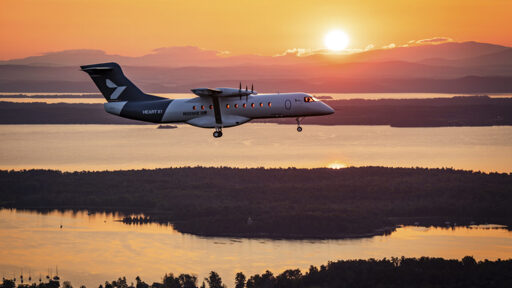
Oh boy… So, they took off from a test facility adjacent to Plattsburgh International Airport. I don’t see it stated, but I give it 98% they landed where they took off. Plattsburgh has some of the lowest residential and commercial electricity costs in the country, so that $5 nets them about 110kWh of juice.
They also reached a maximum altitude of 1,100 feet with a plane that weighs in excess of 25,000 pounds. Lifting 25,000 pounds up to 1,100 feet takes 37 million joules of added potential energy, or a bit above 10 kWh.
The entire remaining 100kWh of energy budget is the equivalent of accelerating the 25,000 pound aircraft up to 252 meters/second at perfect efficiency in a vacuum. This flight was not going very high, and it was not going very fast.
If the economics of their hybrid idea work out, it’ll be fantastic, but the attempt at marketing over transparency here doesn’t fill me with optimism.
Thank you for that.
They didnt say the planes weighted 25000 pounds. They said it could exceed 25000 pounds. My guess is that not even the passenger seats were installed in this run.
1mw of power from the 4 engines. For 30 minutes, 500kWh. So for $5 they paid 1 cent per kWh. Somewhere there’s a bunch of bullshit hidden.
Well, its possible the motors weren’t at 100% at all times, but I’d imagine that at that maths its still 1-2 cents per kWh, which still seems quite off.
I looked it up quickly to get some context. Google (alphabet). Which is a huge consumer of energy. Has deals directly with the electricity producers. It’s reported they pay ~4-12 cents per kWh in the US, depending on where the energy comes from.
And they can get those prices because they are an enourmous customer that can sign multi-year deals that benefits the producers ability to expand production.
So… i would love to know how this company managed to get rates around 1-2 cents per kWh
They did. It can bee seen in the press release photos and the video they released
They would have needed more than that. Likely got some lower rate somehow
Vne, max airspeed, of this plane is 140 knots (72 m/s). Less than a Cessna 150. Max altitude is 2,000 feet AGL, significantly lower than a Cessna 150
It would be, but I highly doubt it. Energy density of batteries is simply too low. This plane can barely fly at slow speeds with no cargo or passengers, and with a cockpit stripped down to a single pilot. Hybrid thrust would be heavier than either jet A or battery-electric, and it still has the downsides of including batteries for the entire flight
Hydrogen or nuclear will be viable before battery-electric in aviation