I believe I touched on that in my last sentence, but I can elaborate:
That will probably happen – neural networks are approximation algorithms. It’s a question of how often that happens.
What percentage of the calls get misclassified? And what’s the threshold percentage that would be needed for the triage bot to be a net positive?
It sounds like they have an idea of these numbers based on data collected from the non-emergency line, so it’s not like they’re just blindly jumping into this.
EDIT: I just realized that I did not actually answer your question of “what happens”…
I imagine the caller would just interrupt the AI’s answer (e.g. “No not that,” “HELP,” “Give me a human,” “FUCK!” etc.)? That seems like the natural thing to do.
To be clear: I don’t know anyone at Carbyne or OPCD. I can only offer speculation.
how long could the queue be? If someone can’t wait 60 seconds for the queue, but can take the 8 seconds to ask if it’s about X incident. I do imagine it will be smart enough to check their approximate location before giving the prompt
I don’t think there’s any net positive that would account for not answering an emergency call at all.
Exactly. That’s what they want to solve.
TL;DR: Even when callers reach the triage bot, they can still reach a human much faster than without the triage bot.
Comparing again:
WITHOUT the triage tech:
NOBODY (or nothing) answers the call for a long while, because the caller is stuck in a very long queue of calls waiting to tell them about the same emergency
WITH the triage tech:
AI bot answers the call instantly and probably knows how to help because the call is probably about the same emergency that 95% of the other calls are about
so 95% less spam for the human operators to get through
If the call is NOT about the same thing as the others, the caller can simply say that (i.e., “no”), and they reach a human within, say, 5-10 seconds because the operators aren’t busy trying to get through the spam calls
They chose this tech because it has already proven to be a net positive on their non-emergency line.
I believe the argument is that the probability of misclassifying an arbitrary segment of speech as the very particular answer “yes” is sufficiently low (with reasonably trained, current models) that we may ignore it under practical circumstances.
I find the non-zero probability of misclassifying in a little disquieting, but I suppose one way of looking at it is that this will probably increase the expected value of lives saved; the very probable case (calls are correctly filtered and a smaller proportion is passed through, allowing operators to respond to more new emergencies) may save a lot of lives, whereas the very improbable case (something that is not “yes” is misclassified as such) may endanger a few.
One thing that would worry me about just looking at expected values is the possibility of bias against a particular group of people or emergency type, but to me that seems unlikely in this case.
Edit: it also just occurred to me that if you are woefully unfortunate, you can probably just call again if you accept the assumption that there is a high probability the answer is yes given the model classified it as such. It might be more or less random chance?
Yeah I just don’t buy that there is a case where any “net gain” here is justified. These are people’s lives that you’re playing with by reducing them to what amounts to a balance sheet in the name of saving money.
The idea that you would create the possibility of denying someone emergency care that didn’t exist before, no matter how improbable (probably not even that improbable, given the propensity even the most advanced frontier AI models have for getting things wrong or hallucinating entirely despite simple instructions) just to save 10-15 seconds on average for other callers is not only absurd on its face, but morally bankrupt. You can personally ignore it because you don’t live there and it’s not the lives of you or your family at stake. I think those who this system could fail would not be able to ignore a flaw like that when it happens to them, and the idea that their peril was “highly improbable” will not be of much comfort to them.
The problem is that there are staffing shortages. The solution is hiring more staff. Trying to cheat our way out by implementing a system prone to unmitigatable flaws that could have life-altering or even life ending consequences isn’t a solution, it’s dystopian.


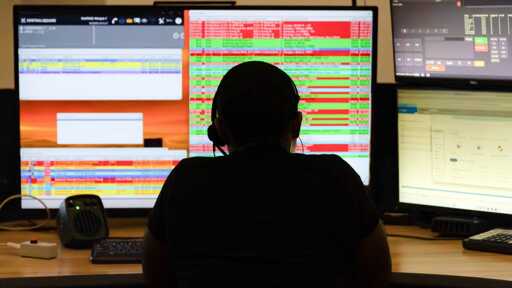
I believe I touched on that in my last sentence, but I can elaborate:
That will probably happen – neural networks are approximation algorithms. It’s a question of how often that happens.
What percentage of the calls get misclassified? And what’s the threshold percentage that would be needed for the triage bot to be a net positive?
It sounds like they have an idea of these numbers based on data collected from the non-emergency line, so it’s not like they’re just blindly jumping into this.
EDIT: I just realized that I did not actually answer your question of “what happens”…
I imagine the caller would just interrupt the AI’s answer (e.g. “No not that,” “HELP,” “Give me a human,” “FUCK!” etc.)? That seems like the natural thing to do.
To be clear: I don’t know anyone at Carbyne or OPCD. I can only offer speculation.
I don’t think there’s any net positive that would account for not answering an emergency call at all.
Can you really justify someone not being able to reach help at all in place of everyone being able to reach it albeit slower?
As a lifelong first responder, I couldn’t get behind something like this at all.
how long could the queue be? If someone can’t wait 60 seconds for the queue, but can take the 8 seconds to ask if it’s about X incident. I do imagine it will be smart enough to check their approximate location before giving the prompt
:sigh: Okay, I’ll try to break it down even more…
Exactly. That’s what they want to solve.
TL;DR: Even when callers reach the triage bot, they can still reach a human much faster than without the triage bot.
Comparing again:
WITHOUT the triage tech:
WITH the triage tech:
They chose this tech because it has already proven to be a net positive on their non-emergency line.
None of that applies if a caller just can’t get through at all because the bot mistook “no” for “yes”
I believe the argument is that the probability of misclassifying an arbitrary segment of speech as the very particular answer “yes” is sufficiently low (with reasonably trained, current models) that we may ignore it under practical circumstances.
I find the non-zero probability of misclassifying in a little disquieting, but I suppose one way of looking at it is that this will probably increase the expected value of lives saved; the very probable case (calls are correctly filtered and a smaller proportion is passed through, allowing operators to respond to more new emergencies) may save a lot of lives, whereas the very improbable case (something that is not “yes” is misclassified as such) may endanger a few.
One thing that would worry me about just looking at expected values is the possibility of bias against a particular group of people or emergency type, but to me that seems unlikely in this case.
Edit: it also just occurred to me that if you are woefully unfortunate, you can probably just call again if you accept the assumption that there is a high probability the answer is yes given the model classified it as such. It might be more or less random chance?
Yeah I just don’t buy that there is a case where any “net gain” here is justified. These are people’s lives that you’re playing with by reducing them to what amounts to a balance sheet in the name of saving money.
The idea that you would create the possibility of denying someone emergency care that didn’t exist before, no matter how improbable (probably not even that improbable, given the propensity even the most advanced frontier AI models have for getting things wrong or hallucinating entirely despite simple instructions) just to save 10-15 seconds on average for other callers is not only absurd on its face, but morally bankrupt. You can personally ignore it because you don’t live there and it’s not the lives of you or your family at stake. I think those who this system could fail would not be able to ignore a flaw like that when it happens to them, and the idea that their peril was “highly improbable” will not be of much comfort to them.
The problem is that there are staffing shortages. The solution is hiring more staff. Trying to cheat our way out by implementing a system prone to unmitigatable flaws that could have life-altering or even life ending consequences isn’t a solution, it’s dystopian.